
440 miles, 48077 feet elevation gain and 39:39 hours of riding.
Cape Epic was so much more than riding our mountain bikes for 8 consecutive days.
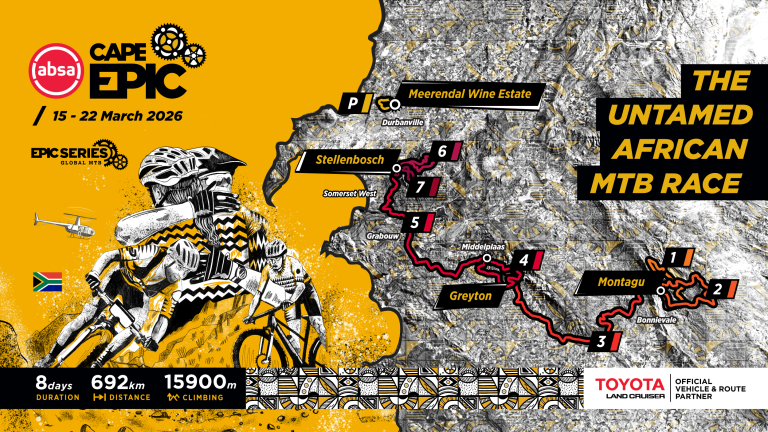
There was a huge logistical undertaking of making our way from Meerendal to Montagu to Stellenbosch. The prologue started at Meerendal Wine Estates on Sunday. Karel and I had a start time of 11:30am. Shortly after we finished (and showered/changed/ate) we made our way ~2 hours to Montagu (so thankful for our friend Elrika for driving our SUV for us to get to stage 1 and then returning to the car rental in Cape Town. Otherwise we would have taken the race shuttle). From there, we spent 3 nights at Montague before (transitioning) biking to a new location. We then spent another three nights in Greyson before (transitioning) biking to our final location in Stellenbosch. To keep things simple for us riders, all we had to do is show up. The Cape Epic staff and volunteers took care of the rest. Our suitcases and bike bags were stored away throughout the race and we picked them up after the last stage. We received USWE bags for the race.
- Food
- Meals
- Water
- Showers
- Bathrooms
- Transferring luggage
- Tents
- Bike service
- Chill zone
- Charging stations


Here's a more detailed schedule:

Karel and I have completed several stage races (ex. 7-day Haute Route Alps, 4-day PE Plett, 6-day Breck Epic, 5-day Oregon Gravel Grinder) and we've learned something from every event. My biggest tips for a stage race is 1) Be organized 2) Have a routine.
Although no two stages were the same at Cape Epic, our typical day was very similar. I thought it would be fun to walk you through a typical day. I will start with after the stage is complete as that is where most of the "routine" occurred. Of note, we found Cape Epic to be extremely expensive. We opted for the most affordable option for us which was the tent option. I did upgrade one of our tents to "VIP" which gave us more room, a cot w/ blanket/pillow, an electrical outlet, outside chair and a lamp. The regular tents were very small and only had a small mattress. Karel and I were able to share the VIP tent so I gave Karel the cot and I slept on the mattress (with my sleeping bag and travel pillow).

1) Finish the stage
After each stage, we took a picture together. Because most stages were so warm, we were ready for a cold beverage. We would take a cup of coke or water (or both) from the finish line refreshment area. There was also an area to refill bottles or take a small bucket to rinse off.


2) Wash bikes
We then gave our bikes to the staff/volunteers who cleaned our bikes after every stage. It wasn't a detailed cleaning but rather, a strong rinse with soap and water. After the bikes were cleaned, they sat in the bike area (similar to a triathlon transition area).

3) Recovery zone
We were then given a wet (and often cold) washcloth to clean off all the mud. We would throw these washcloths in a bin after we were finished. There was a table with strawberry and chocolate milk and another large area with pre-made meals (vegetarian and meat). There were also other items like brownies, granola bars, bananas and sometimes candy (ex. gummies). Some riders ate the meals in the tented recovery area and others would eat by their tents. Those who stayed in RVs or off site likely had their own meals prepared and didn't eat the prepared meals. There were no plastic water bottles so you either got a cup at the water station or brought your own bottle to fill up with regular or sparkling water. The USN truck (nutrition sponsor) was outside of the recovery tent if you wanted to get a recovery drink from a paper cup. If we left a drop bag at the start line (with our shower stuff/change of clothes) we could pick that up in the recovery zone. We only did this for the transition stages. Otherwise we would go back to our assigned tent and get our shower stuff.


4) Take a shower
The portable showers were placed throughout the village. The shower truck typically provided 8 showers (4 on each side). Two times we experienced cold water only on one side of the truck, which was fine on the hot days but there were two cooler days and I did not want a cold shower so I waited in line for a hot shower (Karel took the cold shower). We would bring a toiletry bag into the shower (shampoo, conditioner, soap, razor, etc.) and then change inside the shower or outside the shower (if there was a line). Because we finished in the top 3rd of each stage, we never found the line to be too long. I never waited more than 10 minutes for a shower and if I was waiting, a male rider would often let me go ahead (how kind). I will mention that with all of our international events, there's nothing weird with changing in front of the other gender. Even though I covered up with a towel, we've been at events when athletes have no problem getting naked in front of one another. In fact, in some places in Italy, changing areas in pools/gyms are co-ed (with private stalls for actual changing).


5) Relax in the tent or chill zone
After we showered, we would go back to the tent to eat our recovery meal. If the weather was comfortable, we would try to take a nap in the tent. If it was too warm (which it was for most of the stages) we would go to the chill zone to relax (trying to find a fan or portable AC to keep us cool). We brought travel fans which helped us fall asleep until it got cooler throughout the night. The internet wasn't the best for us so it was very difficult to get things done (we were proactive and got most of our work done before the race started). In the chill zone you could buy bottled drinks and coffee (very affordable) and there were also food trucks around the village. One afternoon we purchased a pizza (I ate it all but one slice for Karel) and a smoothie before dinner. You could also fill up your cup or water bottle with regular or seltzer water. Our relaxing never lasted more than 90 minutes as there were other things that needed to get done. Karel would either drop off the bike at the expo mechanic or he would tune-up the bike outside of the bike park area. Whereas Karel was responsible for our bikes, I was responsible for all of our fueling. I cleaned our bottles at the water truck, as well as our hydration packs. I then filled our packs and bottles with water so that I could add powder to everything at our tent in the evening. We did a lot of walking as the village was rather large at each location. We also purchased the laundry service which meant we could drop off the assigned laundry bag with our stuff in it (they only asked for 1 kit, buff and socks but we put in two kits, socks and gloves) to be washed and picked up the next day after the stage. Because we were often so muddy, sometimes we just rinsed our clothes off in the shower to get off the first layer of dirt before laundry.


6) Dinner - 6pm
The dining hall opened at 6pm. Although our appetite wasn't the best, we forced ourselves to eat. There were a ton of food options (several vegetarian options but not high-quality plant based options). The "awards" and briefing started between 6:30-7pm but we were usually back at our tent, getting ready for the next stage.


7) Prepare for the next stage
For the next hour, we would get everything ready for the next stage. I filled our bottles and packs with sport drinks, laid out our gear, prepared our post race stuff (clothes/shower) and if it was a transition stage, we would need to pack up all of our stuff to drop off at the trucks/tent area in the morning. I forgot to take a picture of our tent but it was an organized mess with chargers, cords, bags and gear everywhere. Karel and I both use packing cubes which helps to keep things organized. We each brought 3 kits - jerseys and bibs (Karel brought 4). We would make sure all of our gadgets were charged (or charging) before bed. We would try to fall asleep by 9pm but it was often a restless night of very little sleeping (it was never too noisy but you do hear other people talking between 9-10pm). As we would lay down in the tent, I would open the Cape Epic app and watch the athlete briefing of the next stage and study the course map. Before bed, I would also know our wave start time which was based on our placement from the previous stage. We started in wave F and moved to E and stayed in D for the remainder of the race. Karel didn't review any maps but instead, I told him any important details like if there was a sketchy section or a place we would need to get off our bikes (mandatory on the queen stage) and where the aid stations were and which one we would stop at. We also received a packet of stickers to put on our top tube - one for each stage. I put the sticker on my top tube to know where the aid stations were and the climbs/descends and told Karel as we were riding.


8) Race morning
We woke up to a 4:50am alarm on Stage 1-6. Stage 7 was a treat to wake up at 6:50am! On stage 1, the race started early due to heat but for the remainder of the stages, we typically started at 7:30am. After we woke up, we went to the portable bathrooms (the women had nice bathrooms and the guys typically had port-o-potties) and then we would brush our teeth at the water station. We would then try to stomach some food (very extensive breakfast!) at 5:30am. We would go get our bikes from the bike mechanic (who we paid to do a full detail on our bikes after two stages) or at the bike park. I would pick up our SOS responder by the start line area (that I had to keep in my pocket and return immediately after the stage). We would then get everything ready for the stage. Around 30 minutes before our stage we would ride around or go to our corral. In order to enter the corral, we needed to show our SOS and match our names/bib numbers to a sheet of paper and then we could enter. We rolled over a grassy area that protected our shoes and bikes from Foot and Mouth disease and then stood in the corral for the next 20 minutes. 5 minutes before our wave started, we rolled to the starting line. At 1 minute, the countdown (and music) began and at 7:30am, we were off for another 5+ hours of racing.


And then we did it all again, again and again.
(I did reserve an Airbnb when we were in Stellenbosch which was such a treat to have a kitchen, normal bed, AC!!! and a normal shower for the final two stages.

Inside our Airbnb