
When it comes to racing in the heat, most triathletes think about heat mainly in terms of “don’t overheat,” while the best hot-weather racers think about the strategies to reducing thermal strain so they can keep moving forward late in the race.
Most importantly, cooling and hydration are not separate topics. They work together to maintain plasma volume, sweat rate, and sustainable pacing.
Heat changes the tactics of triathlon racing. As core temperature rises, the body diverts more blood toward the skin for cooling. Sweat losses increase, plasma volume drops, heart rate climbs, and perceived effort rises, even at the same pace or power output.
The athletes who perform best in hot conditions are usually not the toughest. They are the ones who manage heat load most effectively.
Most importantly, cooling and hydration are not separate topics. They work together to maintain plasma volume, sweat rate, and sustainable pacing.
Heat changes the tactics of triathlon racing. As core temperature rises, the body diverts more blood toward the skin for cooling. Sweat losses increase, plasma volume drops, heart rate climbs, and perceived effort rises, even at the same pace or power output.
The athletes who perform best in hot conditions are usually not the toughest. They are the ones who manage heat load most effectively.
After participating in a lot of hot weather races, here are my personal top tips for managing the heat in order of priority.

1. The Foundation of Exercising in the Heat: Hydration (Fluids) and Sodium
The single most important factors in hot-weather racing are maintaining fluid and sodium balance.
When body temperature rises, sweating becomes the body’s primary cooling mechanism. Sweat evaporation removes heat from the skin and helps regulate core temperature. But sweating only works well if the body has enough fluid available.
As dehydration progresses:
When body temperature rises, sweating becomes the body’s primary cooling mechanism. Sweat evaporation removes heat from the skin and helps regulate core temperature. But sweating only works well if the body has enough fluid available.
As dehydration progresses:
- Plasma volume decreases
- Blood becomes more concentrated
- Cardiac output becomes less efficient
- Heart rate rises
- Sweat rate eventually declines
- Core temperature climbs faster
- Performance suffers
Sodium is equally important because it helps maintain:
- Fluid balance
- Nerve and muscle function
- Plasma volume
- The drive to drink
Heavy sodium losses can impair hydration even when fluid intake is adequate.
Hydration 101
Hydration is not just about replacing sweat loss. It is about preserving the body’s cooling capacity.
Practical recommendations:
- Begin races well hydrated, not overhydrated - urine should be lightly yellow (not clear)
- Consume sodium and fluid consistently throughout the race rather than waiting until dehydration or overheating symptoms appear
- Adjust sodium and hydration intake to sweat rate and weather conditions. Consider the volume of fluid in your water bottle to help meet hydration needs.
- Increase sodium and fluid intake in very humid or high-sweat conditions
- Don’t rely on thirst alone
- Set a timer to reminder you to drink while cycling
- Wear a hydration belt while running

Once hydration is addressed, external cooling becomes the next major performance tool.
The body loses heat most effectively through evaporation. Water sitting on the skin absorbs heat energy and carries it away as it evaporates.
This is why staying wet during a hot race can significantly reduce thermal strain.
There are a few ways to keep the body wet while racing.
- Cooling towels (chamois-style material) - Materials that retain water (specifically chamois-type fabrics) act like portable evaporative cooling systems. When soaked, they hold cold water against the skin longer, they slow skin temperature rise, they increase evaporative heat loss, they improve comfort and perceived exertion. This can be especially helpful during long exposed runs where aid stations are spaced apart.
- Cooling sleeves - Cooling sleeves help in two ways. They keep the skin wet longer, they increase surface area for evaporation. Many athletes assume bare skin is always cooler, but in dry or moderately humid conditions, wet cooling sleeves can outperform exposed skin because they sustain evaporative cooling more consistently.
- Breathable hats and visors - The head is highly vascular and receives substantial blood flow during exercise. Breathable hats or visors help by allowing heat and moisture to escape, reducing direct solar radiation, providing a platform for holding cold water or ice. A saturated hat can become an effective cooling tool at aid stations.
Many athletes only focus on humidity and temperature. But the wet-bulb temperature combines temperature, humidity, wind speed, and sunlight to measure how effectively the body can cool itself, representing a "real-feel" of heat stress.
3. Ice Strategy
Ultra runners have become much more aggressive with ice use, yet triathlon is slow to this useful trend.
Ice works through several mechanisms.
Ultra runners have become much more aggressive with ice use, yet triathlon is slow to this useful trend.
Ice works through several mechanisms.
- Holding ice - Holding ice in the hands can cool blood flowing through highly vascular areas. While the effect is modest, it may reduce thermal perception and improve comfort.
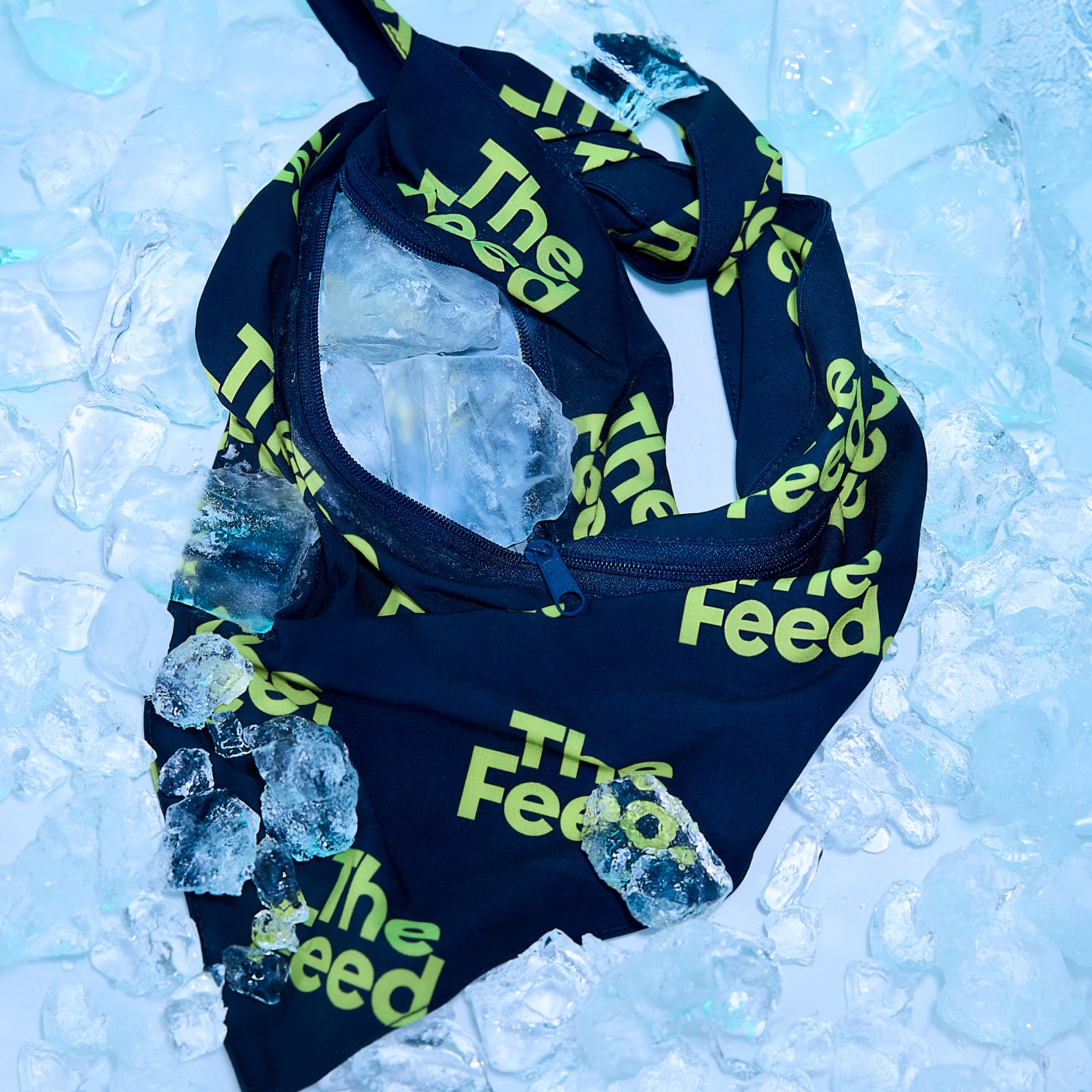
- Ice in sleeves, hats, and bandanas - This is often more effective than holding ice. Ice bandanas have become popular in ultrarunning (alongside ice in leg stockings while cycling) because they combine conductive cooling, gradual melting, continuous evaporative cooling. They essentially create a portable cooling reservoir.
- Ice placed near major blood vessels — such as the neck, armpits, groin, wrists can cool circulating blood before it returns centrally.
- Sucking on ice / ice slurry ingestion - Internal cooling may be one of the most effective strategies. Although wearing an ice vest has proved helpful before hot weather races, it's not very practical in a triathlon. However, consuming an ice slurry or crushed ice ingestion may lower thermal sensation, reduce core temperature rise, and increase heat storage capacity before overheating occurs. Ice inside the body creates more room before the athlete reaches a critical thermal limit. This can delay fatigue and improve endurance performance in hot races.

4. The Omius Visor/Hat: Graphite-Based Cooling
The Omius visor is interesting because it uses conductive cooling rather than relying only on airflow.
Its graphite-based cooling pieces are designed to absorb heat efficiently, spread heat across the surface, enhance evaporative cooling when wet. The key detail is that the system must remain wet to function optimally. This is because the cooling effect comes from the interaction between water
airflow and heat conduction through the graphite material.
Graphite has high thermal conductivity, meaning it transfers heat efficiently. When water saturates the material, heat from the skin transfers into the graphite, water absorbs that heat, evaporation removes it from the system. The visor is effectively enhancing evaporative and conductive cooling simultaneously.
Alongside being pricey, the Omius Visor should not be your first tool for managing the heat. More so, the headband works best in dry heat, with regular rewetting, at higher airflow speeds (like cycling or running). It works less in extremely humid conditions where evaporation is limited.
Takeaway
Successful hot-weather racing is about reducing thermal strain early before overheating occurs.
By the time athletes feel overheated, performance decline has often already begun. The best hot-weather racers are proactive. They hydrate early, manage sodium consistently, and use every opportunity to reduce heat load before it becomes limiting.
The Omius visor is interesting because it uses conductive cooling rather than relying only on airflow.
Its graphite-based cooling pieces are designed to absorb heat efficiently, spread heat across the surface, enhance evaporative cooling when wet. The key detail is that the system must remain wet to function optimally. This is because the cooling effect comes from the interaction between water
airflow and heat conduction through the graphite material.
Graphite has high thermal conductivity, meaning it transfers heat efficiently. When water saturates the material, heat from the skin transfers into the graphite, water absorbs that heat, evaporation removes it from the system. The visor is effectively enhancing evaporative and conductive cooling simultaneously.
Alongside being pricey, the Omius Visor should not be your first tool for managing the heat. More so, the headband works best in dry heat, with regular rewetting, at higher airflow speeds (like cycling or running). It works less in extremely humid conditions where evaporation is limited.
Takeaway
Successful hot-weather racing is about reducing thermal strain early before overheating occurs.
By the time athletes feel overheated, performance decline has often already begun. The best hot-weather racers are proactive. They hydrate early, manage sodium consistently, and use every opportunity to reduce heat load before it becomes limiting.
You can pour ice water over your head at every aid station, wear cooling sleeves, use a cooling towel, wear a cooling visor and pack your tri suit with ice. Sure, all of those strategies can absolutely help reduce thermal strain. But none of them can fully compensate for failing to meet your personal hydration, fueling, and sodium needs. External cooling helps cool the body from the outside in, while hydration and sodium support the body’s ability to cool itself from the inside out. Once plasma volume drops and sweat production becomes compromised, core temperature rises faster, heart rate drifts upward, and performance begins to fade. The athletes who race well in the heat are not just the ones using the most cooling tools but they are the ones supporting the body’s entire cooling system from both directions.